When choosing a pear-shaped diamond engagement ring, look at the stone's outline, its appearance in different lighting and how the setting protects the pointed end. Then consider the fit, the band and how you plan to wear it.
A fuller pear and a slender pear can create quite different rings. The following questions will help you compare options and prepare a bespoke brief. You can also see CAD and finished-ring photographs from a La Roche pear-shaped solitaire project.
Pear-shaped diamond proportions and outline
Compare a few pear shapes side by side. Do you prefer a fuller, softer outline or a longer, narrower one? Ask to see the actual length and width in millimetres and, where possible, try a comparable shape on your hand. A close-up photograph alone gives little sense of scale.
The length-to-width ratio describes how elongated the stone is. Use it to compare outlines, rather than treating one number as the ideal for every ring. Keep your reference photographs labelled so you can distinguish different stones from different views of the same stone.
GIA's pear-shaped diamond guide highlights a balanced outline and the importance of examining the stone from different angles. Look at how the sides meet the point and whether the overall shape feels even. Appearance deserves attention alongside the report.
How to assess the bow-tie effect
Some pear-shaped diamonds show a dark band across the middle, commonly called a bow-tie. GIA advises viewing stones in different lighting conditions; a distracting dark area is easier to assess in motion than in one carefully chosen photograph. Contrast itself is not a reason to reject every stone.
Ask for a simple viewing sequence: the stone facing the camera, a slow tilt and a view under ordinary lighting. If you visit in person, compare the shortlisted options in the same conditions. Explain what you see and what bothers you, rather than relying on an unfamiliar technical label.
Choose a stone you enjoy looking at in everyday conditions, and resolve any concerns before approving its setting.
Choose a setting that protects the point
The point is a distinctive part of a pear shape and needs protection. GIA discusses setting choices that protect it; ask the jeweller to explain the proposed support and why it suits the particular stone. Do not select the mount from a top-view photograph alone.
Request a side view and a view from underneath. Discuss how high the ring will sit, how the mount connects to the band and which details will touch neighbouring fingers. If you often wear gloves or have specific work requirements, mention them when the design is being considered.
If you prefer a delicate-looking ring, explain that to the jeweller and discuss suitable dimensions. Review the proposed band width and setting height before approving production.
Decide what the band should add.
A plain band keeps the visual emphasis on the centre. A stone-set band introduces another layer of detail, while a halo changes the outline seen from above. Choose the effect you prefer before comparing complete quotations, because these are different specifications.
Ask to see alternatives with the same centre-stone outline. This helps you judge the setting itself. If each example changes the stone, band, angle and lighting, it is harder to identify which feature you actually prefer.
For additional stones, request a clear description of what will be supplied. If you are choosing a diamond centre, specify whether the diamonds throughout the ring should be natural or laboratory-grown. Keep any difference between the centre and the smaller stones explicit in the quote.
Which way should the pear point face?
You can wear the point towards the fingertip or towards your wrist. An east-west setting places the pear across the finger. Try the orientations to see which you prefer; there is no single correct direction.
If the ring will be worn beside a wedding band, discuss both pieces at the design stage. Ask whether the proposed band sits flush, leaves a deliberate gap or needs a shaped companion. A side view of the pair can reveal a relationship that a front view hides.
If you already own the wedding band, provide its measurements and photographs, or ask whether the pieces can be assessed together. Do not assume that a ring designed in isolation will sit exactly as you expect next to an existing piece.
What our finished ring shows.
A customer asked La Roche to complete a solitaire within two days. The project involved sourcing the centre stone, CAD development, casting, filing, setting and polishing. The finished ring has a pear-shaped centre and a stone-set band.
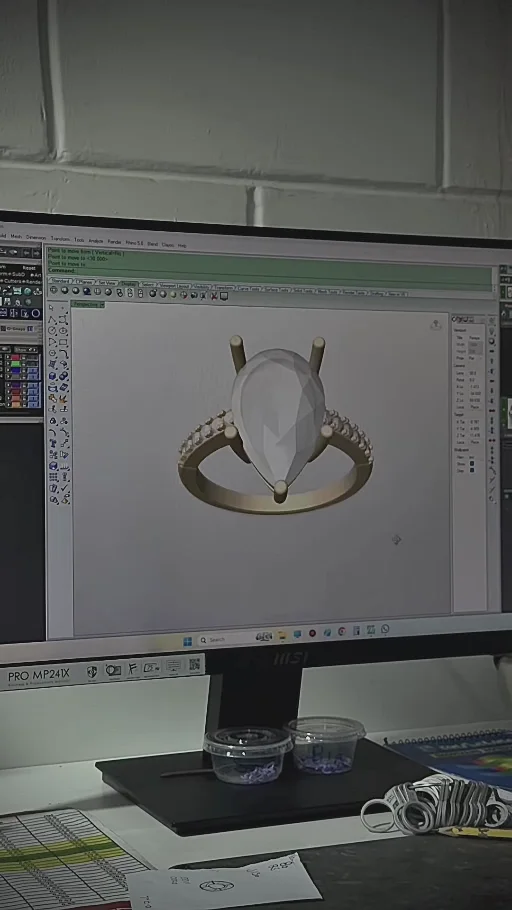
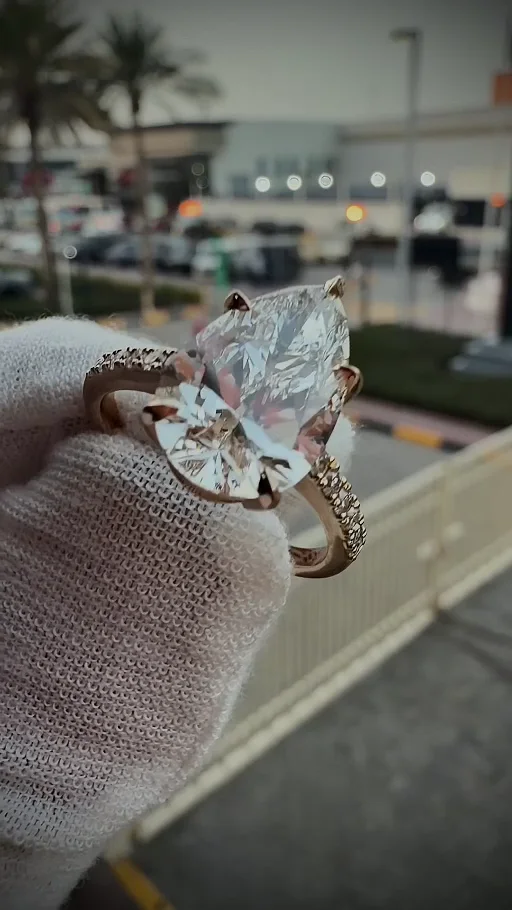
The case study and process film show CAD, filing, setting, polishing and the finished piece. Sourcing and casting were part of the project but were not filmed.
These photographs illustrate the design and production process. The centre stone's identity, weight and grade, and the metal specification, are not published for this project.
The two-day result belongs to this project. For a new project, stone availability, approvals and the production schedule must be reviewed before confirming a delivery date. Share your occasion date early so the conversation can establish what is feasible.
What to check in the CAD design
When you receive a proposed CAD view, look beyond whether the picture is attractive. Ask for the band width, setting height, ring size and the centre stone's dimensions. Confirm whether the stone shown represents the actual selected stone or a placeholder used during initial development.
Write down any changes against the relevant view. For example, identify which part of the band feels too wide or where you want a different relationship between the centre and surrounding detail. A specific comment is easier to resolve than several unlabelled reference images.
Before approving the design, ask what remains subject to finishing or production allowances. Keep the accepted version with your quotation. If you later choose a different stone, ask whether the setting needs to be reviewed again rather than assuming the existing design will fit.
Prepare a brief for the ring you intend to wear.
Start with a small set of decisions. You do not need to arrive with a finished technical drawing, but a clear preference makes the consultation more useful.
- Stone: natural or laboratory-grown diamond preference, shape references and any existing stone documentation.
- Appearance: a fuller or more elongated outline, preferred orientation and the features you like in your references.
- Mount: metal colour, plain or stone-set band, and whether you want to consider a halo.
- Fit: ring size if known, wear requirements and any wedding band to pair with it.
- Budget and date: your total budget in AED and the required collection or delivery date.
If the ring is a surprise, explain which details you know and which remain uncertain. Ask how sizing and final design approval should be handled for your project. It is better to identify that uncertainty at the start than to build the quote around an unconfirmed size.
Compare the complete proposal before deciding.
Review the stone, setting and production terms as one proposal. Confirm what the quoted total includes, which reports or other documents will be supplied, the approval stages and the agreed aftercare. Our UAE diamond-ring quotation guide provides a checklist for comparing these details.
Plan your pear-shaped ring.
Send your preferred outline, budget and occasion date. La Roche will review the project's scope and feasibility with you.
Discuss a bespoke ringExplore our approach to gemstone sourcing and setting.